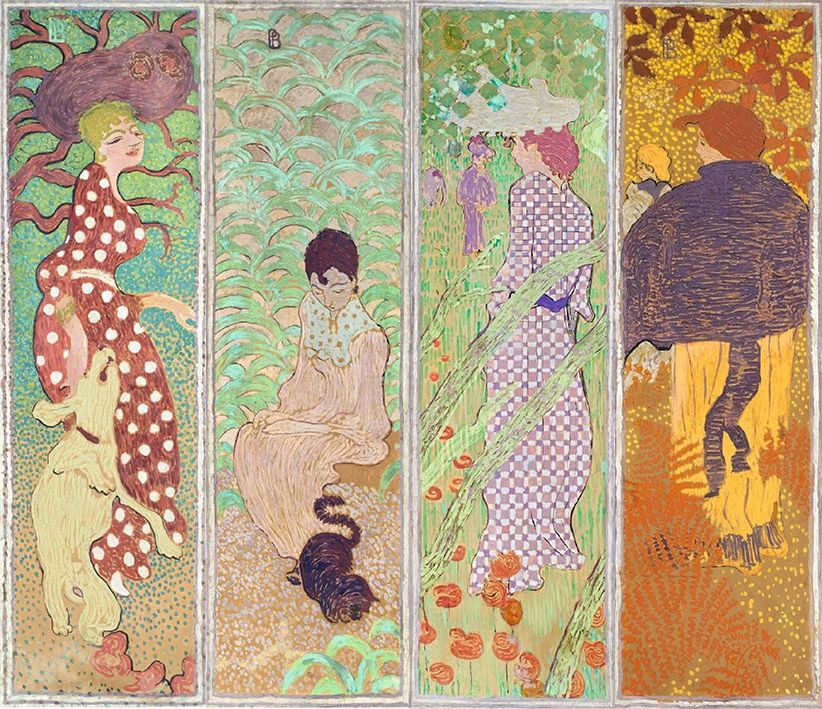
How exquisitely lush and engaging is the art of Pierre Bonnard? Within the four panels of Women in the Garden one can appreciate the patterns extolled in Japanese ukiyo-e, rendered in more naturalistic, organic ways. Lines swerve and saunter throughout the plane, as refreshing as a splashing waterfall. Pointillism is used to great effect across the four panels, creating both texture and gradients bursting with color and verve.
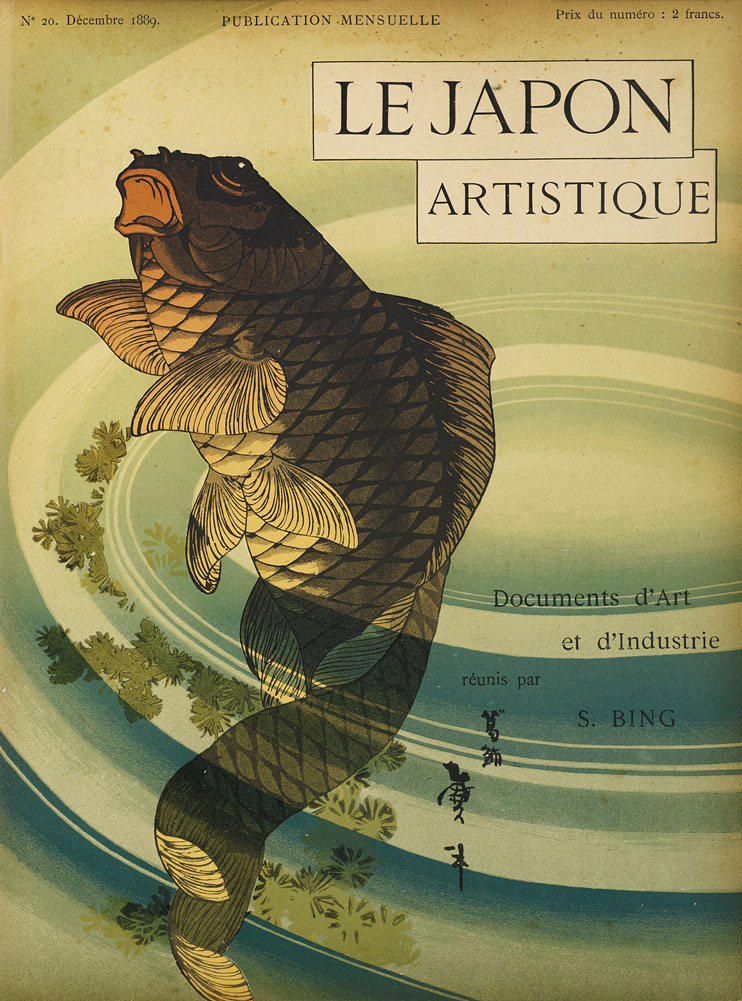
Bonnard was part of the Nabis—a group of French Post-Impressionists based in Pont-Aven. He counted Paul Sérusier, prodigy of Gauguin, among his colleagues. However, Bonnard has been considered as “the most Japanese influenced of the group.” Bonnard first encountered Japanese art at Maison de l’Art Nouveau, established by Siegfried Bing, who was instrumental in promoting Japanese art among the Nabis.
Of course, Bonnard’s art was striking in other ways, such as the kaleidoscopic range of color in Jeunes femmes dans la rue (1922, Private Collection):
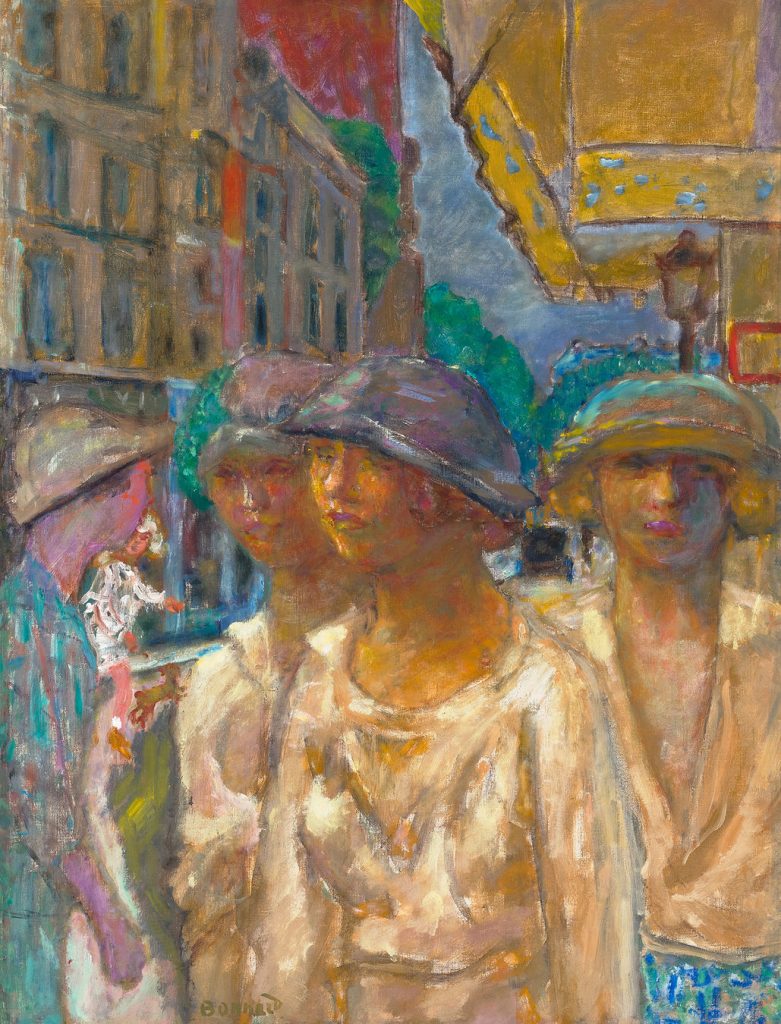
The composition, with its somber figures, evokes that of the Dutch masters, albeit infused with synesthetic brushwork that evokes the sights, sounds and bustle at the heart of an early 20th century city.
Reportedly, Picasso once described Bonnard’s art as “a potpurri of indecision.” While it is unclear if Picasso actually said that, it is perhaps more instructive to think of Bonnard’s line work as that bundle of trapped kinetic energy analogous to the photographic blur.
Leave a Reply