Hello friends! It seems like forever since I’ve made my way on here. However, out of sight does not equal out of mind. Today I share some good news: the book, East Meets West: How 36 Views Influenced Impressionism has just been released as a paperback/Kindle e-book!
What’s it about, you might ask. Well, if you’re a fan of Japanese art—or late 19th century art, or even modern art in general—you probably won’t be surprised to learn that Impressionism was strongly influenced by Japanese woodblock prints. Both Claude Monet and James McNeill Whistler were both strongly influenced by Japanism—the art-historical term for that era of Japanese “fandom” (I guess you could call these artists the original otakus). It was a bit more complex than that, of course: Mostly this influx of Japanese art into Europe was driven by an opening of the nation to international trade, a truly unprecedented even for Japan at the time.
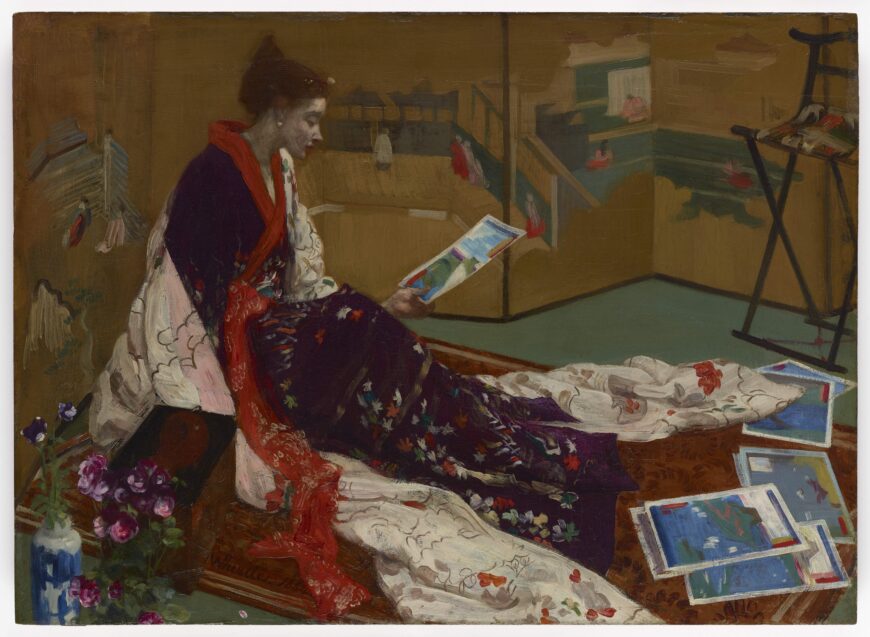
While many Japanese artists shaped the mores and techniques of this movement (and beyond, as with Pierre Bonnard and Vincent Van Gogh), the art of Katsushika Hokusai stands out for also incorporating Western influences in media and composition.
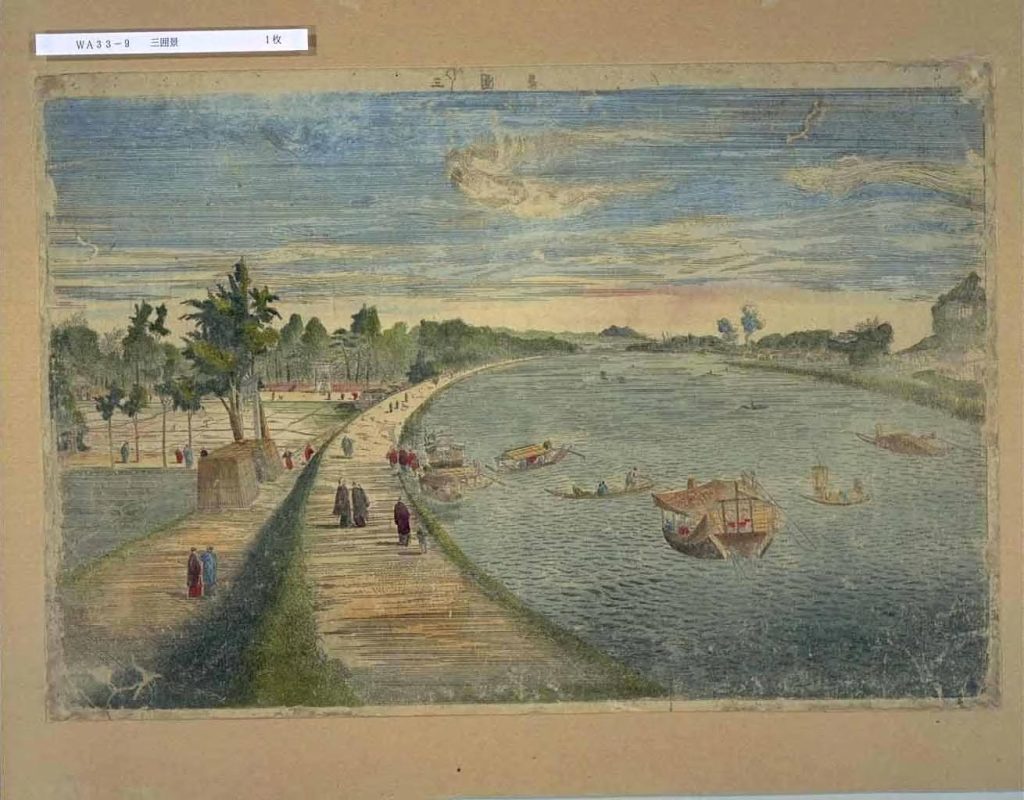
Towards the end of the 18th century, a fortuitous event changed the course of history for both Japan and the Western world: contact was made between Europe and Japanese ports, which led to a greater international awareness for both worldly regions. While Spain and Portugal both made use of this contact for missionary purposes, it was Netherlandish trade which drove a greater curiosity for scientific and technological advances made by the West. A new school of art, “Dutch Studies” emerged as scholars and artists alike tried to make sense out of the visual information from European manuscripts imported by the East Indies Trading Company. The influence was soon notable: Engravings with somewhat prototypical impressionistic “brushwork” emerged in Japan, and woodblock prints with more densely-colored compositions made their way out of ateliers thanks to the arrival of bero-ai or Prussian blue in the early 1800s.
While many artists thrived at this time, Hokusai’s Thirty-Six Views of Mt. Fuji, both seminal for the artist and celebrate overall, stands out due to its intensive use of bero-ai along with its ingenious compositions, which feature scenes of Japanese life with Mt. Fuji as a consistent background. The Great Wave off Kanagawa is the definitive example of this set, and it was known to influence Western artists from Courbet to Manet.
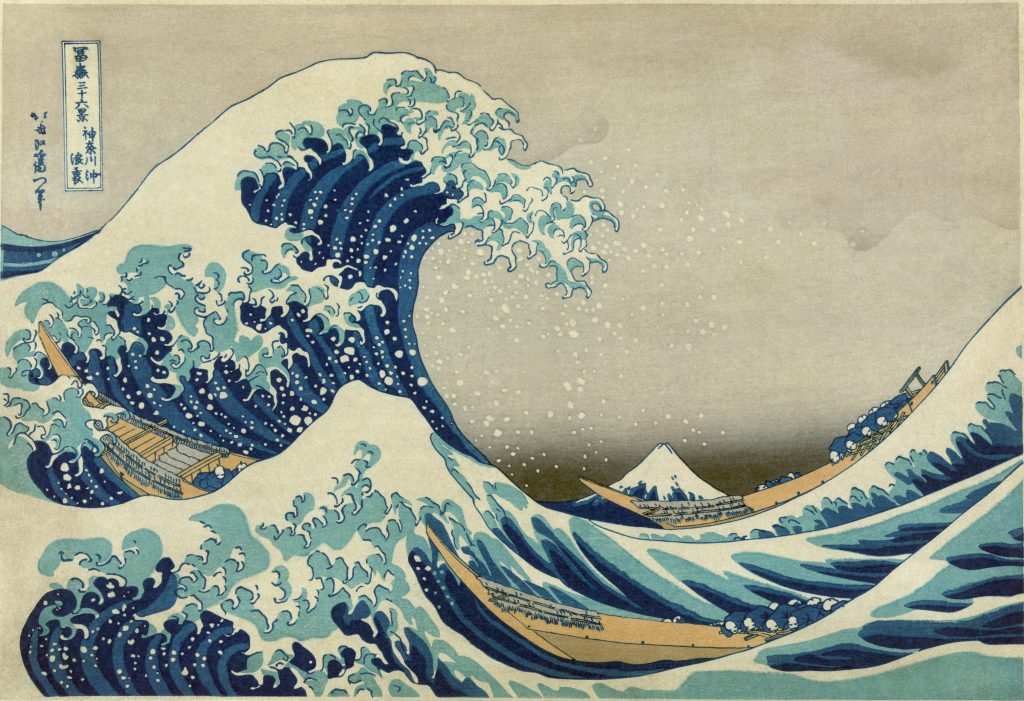
In Hokusai’s The Great Wave off Kanagawa, one can appreciate the richness of bero-ai pigment, which was longer lasting than the plant-based dyes used before. However, one can also appreciate, on a thematic level, what is happening in the scene: Japan was continuously rocked by this novel influx of foreign technology and trade, which was both a source of wonder and tension for a nation with a long-standing history of hermeticism. In a sense, that is what the wave represents: the dizzying tensions arriving from outside, which the fishermen—often a symbol for mindful Buddhist presence and flow—are weathering collectively (some with joyful stoicism, as the little smiles suggest).
Hokusai’s series is almost entirely like that: old ways are juxtaposed against the new, as in Mishima Pass in Kai Province (print #16). Three travelers attempt to complete a Taoist ritual while travelers continue along their way with some indifference towards what has become, perhaps, a passing custom.
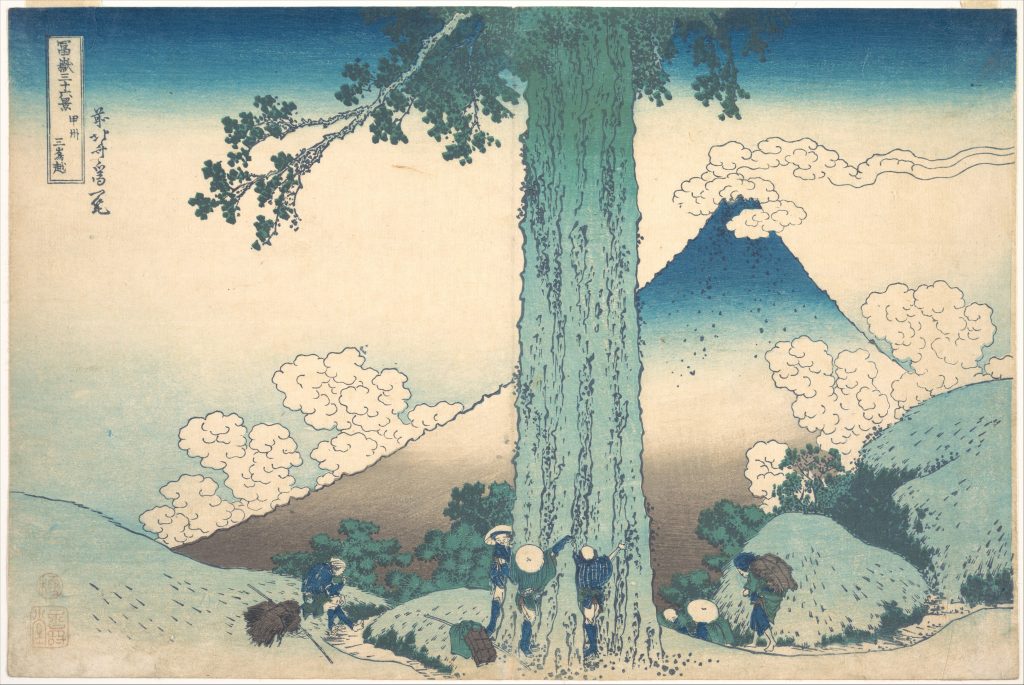
Mishima Pass in Kai Province (Koshu Mishima goe), from the series Thirty-six Views of Mount Fuji (Fugaku sanjurokkei), ca. 1830–32
Japan, Edo period (1615–1868)
Polychrome woodblock print; ink and color on paper; 9 3/4 × 14 3/4 in. (24.8 × 37.5 cm)
The Metropolitan Museum of Art, New York, The Howard Mansfield Collection, Purchase, Rogers Fund, 1936 (JP2556)
http://www.metmuseum.org/Collections/search-the-collections/56786
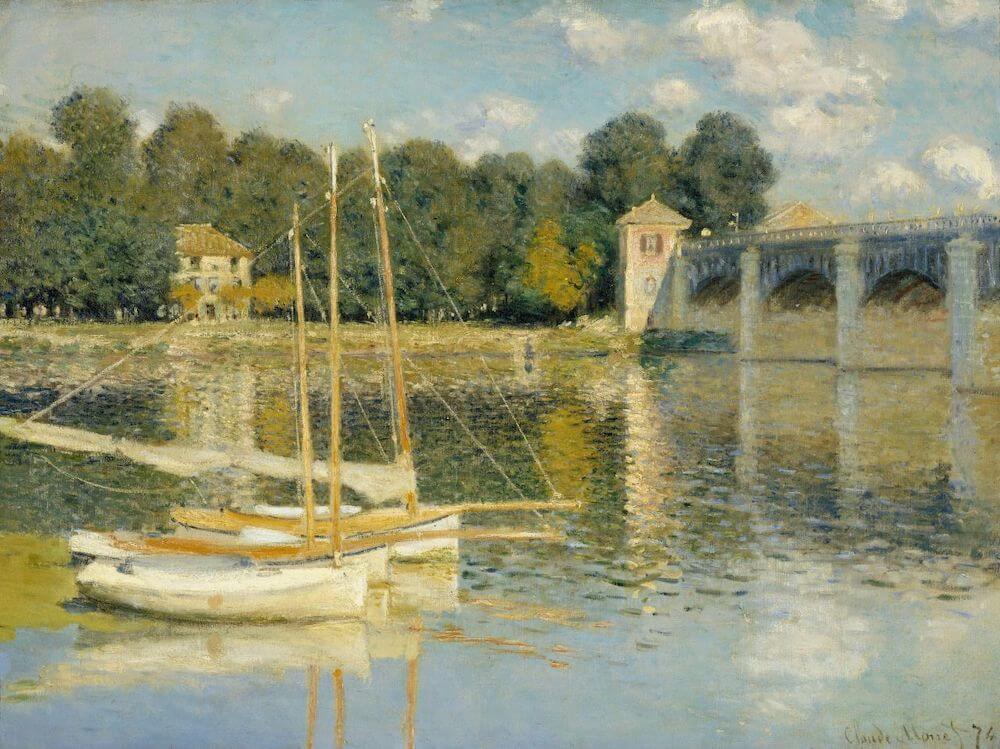
Besides their technical novelty, perhaps this intentional allusion to East-West ambivalence made the prints increasingly resonant to French artists of the 19th century. For instance, the top-down bero-ai frame, a distinctive feature of Hokusai’s 36 views, seems to have made its way to Monet’s The Bridge at Arganteuil, albeit more subtly alluded to in the oil painting:
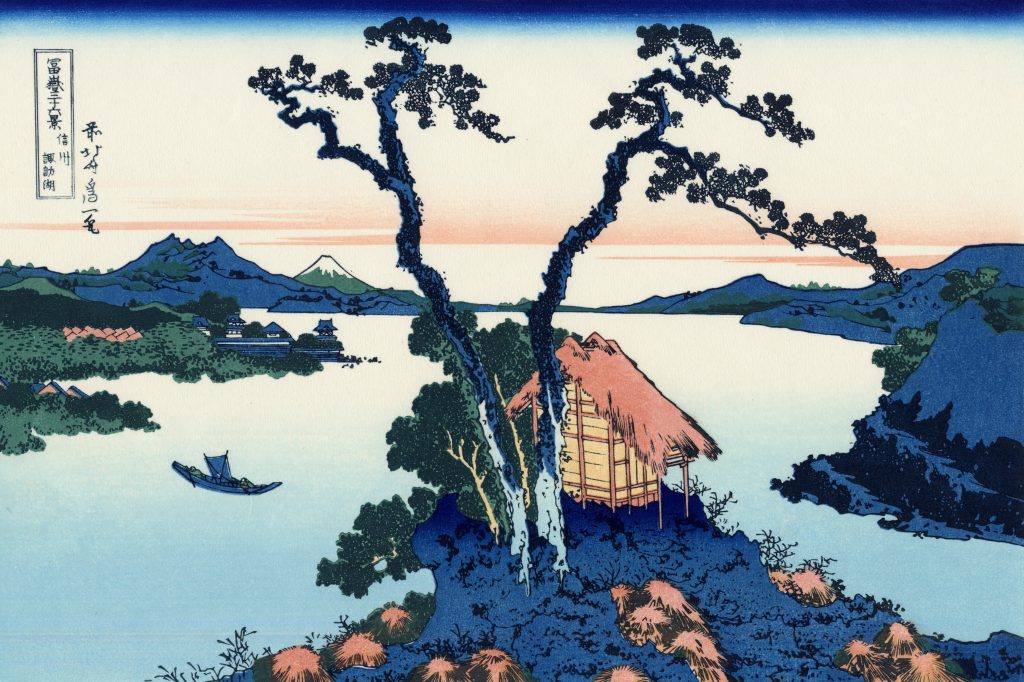
While much could be continued to be said about this phenomenon, I encourage you to check out the book for more insights about how Hokusai’s Thirty-Six Views of Mt. Fuji specifically influenced impressionism both in France and Japan. Other impressionistic features, like concern for time of day, also seem to have originated in prints like Lake Suwa in the Shinano Province (no. 17), where Hokusai explored the same scene with alternative color schemes suggesting night and day.
Finally, we’re excited to announce that this book is the first one published under the INKBRUSHMOOD PRESS label! Hopefully the first of some (or many more) published works about Japanese art/art history. As such, your support is appreciated! If you do get the book—or if you found this post interesting—make sure to drop a comment or e-mail us at ed*******@**********od.com.
Leave a Reply